Oxford vs. Derby: The 19th-Century Origins of Men’s Shoe Formality
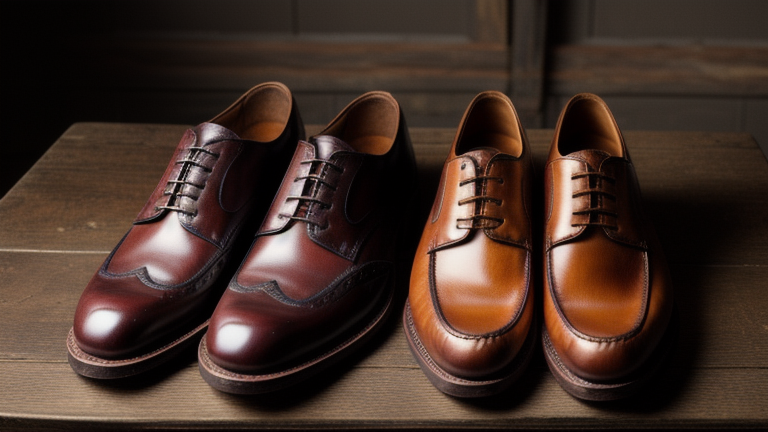
Every menswear guide repeats the same rule: Oxfords are more formal than Derbies. Few explain why. The answer isn’t arbitrary tradition — it’s a direct inheritance from two different solutions to a very practical 19th-century problem: how to close a shoe securely around a foot without modern stretch materials or hook-and-loop fasteners. The construction choice each style made to solve that problem is still visible today, and it’s still the entire basis for the formality distinction.
The Closed Lacing System: How the Oxford Got Its Name
The Oxford shoe takes its defining feature from what’s called “closed lacing” — the eyelet tabs are stitched underneath the vamp (the front part of the shoe), so the two sides meet flush and close with a narrow, controlled gap when laced. This creates a sleek, unbroken line across the top of the foot, which is exactly why Oxfords read as the more refined, formal option — there is no visible functional gap or overlapping panel breaking up the silhouette.
The style is traditionally credited to students at Oxford and Cambridge universities in the early-to-mid 1800s, who favored lower-cut ankle boots with this closed lacing system over the heavier, higher boots that were standard footwear at the time. The style’s formal associations trace directly back to its university-educated early adopters, which over decades translated into its continued role as the shoe of choice for business and formal dress.
The Open Lacing System: Why the Derby Exists at All
The Derby (also called a Blucher in some regions, after a Prussian field marshal associated with an earlier military boot design) uses “open lacing” — the eyelet tabs are sewn on top of the vamp as separate pieces, overlapping rather than meeting flush. This creates a visible V-shaped gap at the throat of the shoe where the two lacing panels stitch on, rather than disappearing underneath.
This seemingly small construction difference solved a genuinely practical problem. Open lacing panels can spread wider apart than closed lacing, making the shoe significantly easier to put on and take off, and more forgiving for wider or higher-volume feet, including feet swollen from long marches or physical labor. That practicality is precisely why the Derby’s military and outdoor-utility lineage runs deeper than the Oxford’s — it was built for function under conditions where speed and adjustability mattered more than a sleek silhouette.
Why Military Origins Still Echo in the Derby’s Reputation
Because open lacing accommodates swelling, movement, and quick adjustment, the Derby became associated with soldiers, hunters, and anyone whose footwear needed to function reliably under physical strain rather than simply look elegant standing still at a desk. That functional, rugged lineage is exactly why the Derby still reads as the slightly more casual, versatile option today, even when made from identical leather and finished with the same level of craftsmanship as an Oxford.
How the Formality Rule Survived Into Modern Dress Codes
By the late 19th and early 20th centuries, as business dress codified around the lounge suit, the Oxford’s closed, sleek construction made it the natural pairing for formal and business attire, while the Derby’s open construction kept its association with country, sport, and everyday wear. This division solidified enough that by the mid-20th century, style guides were treating it as settled convention rather than active debate — a pattern that persists in most style advice today, even though the practical reasons behind it (foot swelling during marches, speed of donning and removing footwear) are largely irrelevant to how either shoe is actually worn now.
What This History Actually Means for a Modern Wardrobe
Understanding the construction origin clarifies when the “rule” genuinely matters and when it’s safe to bend:
- Black-tie or the most formal business settings: the closed-lacing Oxford, ideally in a cap-toe or plain-toe black leather, remains the safer, historically consistent choice.
- Everyday business and business-casual settings: both styles function well; the Derby’s slightly more relaxed silhouette actually pairs comfortably with less formal suiting, like softer-structured jackets or textured wool trousers.
- Wider or higher-volume feet: the Derby’s open lacing genuinely still offers the practical fit advantage it was designed for over a century ago — this isn’t just historical trivia, it’s a real, current benefit.
A Detail Worth Checking Before You Buy
Because the lacing construction is the entire basis of the distinction, it’s worth actually looking at the eyelet tabs before buying rather than relying on the shoe’s marketed name. Occasionally shoes are labeled loosely by retailers; checking whether the lacing panels sit underneath (Oxford) or on top (Derby) of the vamp tells you definitively which category the shoe actually belongs to, and therefore how it should be read in terms of formality.
What began as a simple practical choice about how to close a gap of leather over the top of the foot became, over roughly a century and a half, one of the most durable formality conventions in all of menswear — proof that the most persistent style rules are often rooted in function long before they ever became fashion.
Other Lacing Variants That Borrow From Both Histories
A handful of modern styles sit between the two systems, and understanding the Oxford-Derby split makes these easier to place. Monk straps, which replace laces entirely with one or two buckled straps, emerged from a similar functional need — Alpine monks reportedly wanted shoes that could be removed and refastened faster than laced boots allowed, which is a different solution to a related problem of speed and adjustability. Chukka boots and some desert boots borrow the Derby’s open construction but raise the shoe higher on the ankle, keeping the practical, easy-entry logic while adding the ankle coverage useful for rougher terrain.
Recognizing the closed-versus-open lacing distinction as the real dividing line, rather than memorizing a list of named styles, makes it far easier to correctly judge the formality of less common shoe styles you encounter outside the two classic categories.